
It’s a quiet afternoon after school, and instead of grabbing her violin or sketchbook, your teen slumps in the doorway—tired, overwhelmed, stuck. And you’ve noticed you’re not alone. Data from Mental Health America shows about one in five teens aged 12–17 experienced a major depressive episode last year, yet over 56% didn’t receive any mental health treatment. Arizona meets just 10% of its statewide mental health need, with a ratio of approximately one psychiatrist per 10,739 people, far below the U.S. average of 8,347 to one.
The shortage of mental health resources isn’t just a statistic—it results in missed afternoons, delayed care, and leaves creative teens without a consistent outlet to release their stress through music or art. The pressure mounts silently, especially for teens who pour their identity into creativity and performance.
When creativity meets control issues
Scottsdale teens often switch between traditional therapy, perhaps a counselor at school or a private clinician. But with Arizona having 233 mental health shortage areas, and Pinal County definitely among them, continuity becomes fragile. ([turn0search0]) School counselors average a staggering 667 students per counselor—double the ASCA recommendation. That’s not conducive to noticing when a creative teen quietly retreats.
Creative teens might feel safer in therapy—but when sessions repeat basic check-ins without deeper connection, motivation falls away. The solution? The solution lies in a structured, mindful Intensive Outpatient Program (IOP) that not only adapts to their pace but also functions as a focused reset.
A mindful approach in Apache Junction
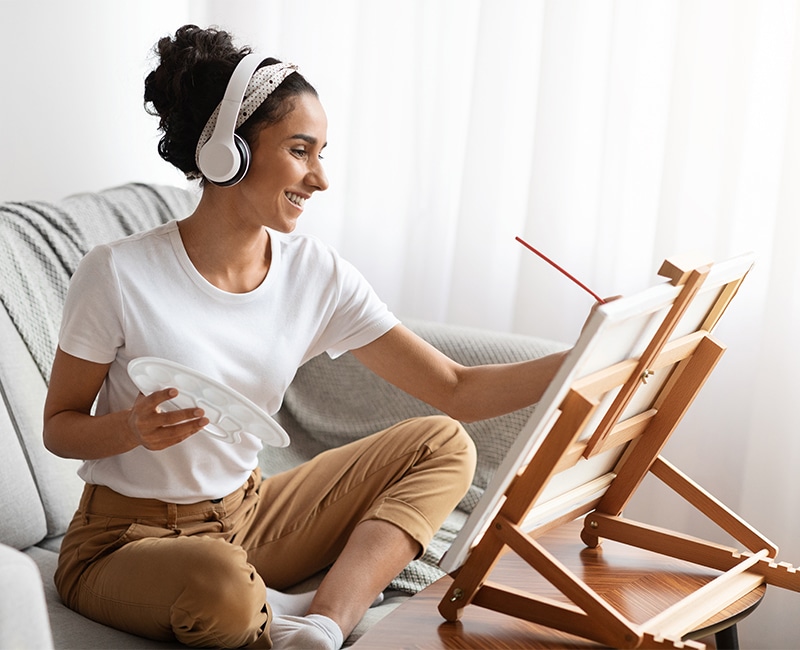
Teens enter an Intensive Outpatient Program (IOP) in Apache Junction combining traditional therapy with art and music modalities and daily mindfulness practices. This program does not involve a residential stay; instead, it offers a therapeutic rhythm that does not require overnight separation. Small-group sessions, expressive-arts workshops, guided music exploration, and breathing and meditation exercises all weave together around school and family.
A sculptor-style art task might follow a group reflection on stress; a songwriting module might organize emotional vocabulary. Teens describe it as “a space to paint what I’m feeling before I have to say the words” or “the first time I wrote music and actually felt listened to.”
Why the location matters
Apache Junction is about a 45‑ to 60‑minute drive from Scottsdale. That travel time becomes intentional—it separates the everyday pressures from the healing environment. Parents often report that the commute turns into reflection time—sometimes tears, sometimes laughter, and eventually, clarity before and after sessions.
Arizona’s ADE-funded telehealth initiative extends support well beyond the on-site IOP. Rural school districts in Pinal County now offer virtual check‑ins, enabling continuity with on‑site therapy—and reducing emotional setbacks for teens returning home. ([turn0search0]) It’s not just a local clinic—it’s a bridge between environment and healing.
Embedding the title: How mindfulness, art, and music healing blend
For teens who live their identities through creativity—artists, musicians, or writers—therapy sometimes feels like just words. But when recovery includes painting, songwriting, or working clay, you meet them where they are. An IOP that balances mindfulness meditation (like guided breathwork), group therapy, and expressive arts enables processing to happen differently.
One teen painter shared how coloring mandalas at the start of the group helped calm the inner critic—transforming judgment into acceptance. A young guitarist used improvisation to explore emotional scales. Parents described witnessing their teen re-engage in hobbies, not because they were assigned, but because they felt chosen again.
Art and music as therapeutic tools
Art and music therapy techniques have shown significant emotional impact: writing lyrics to process trauma, sketching fractals to visualize anxiety looping, or composing short pieces to echo emotional tone. Expressive arts therapy offers nonverbal pathways to healing—especially necessary when verbalizing feels unsafe.
It’s not about creating masterpieces—it’s about creating safety. Therapy groups rotate through art, music, and mindfulness with licensed clinicians guiding each session with intention—not just technique. The effect? Teens who begin skeptical about “therapy” often settle more easily into creative expression first—and then share what’s underneath.
Why this blend reaches the wellness-focused teen
Creativity-focused teens often resist talk therapy alone; mindful exercises provide emotional grounding before conversation. Music therapy can regulate mood with rhythm, tempo, and melody—physical and emotional language intertwined. Art-making offers visible proof of inner change.
When paired with mindfulness practices—like guided breathing, body scanning, or mindful walks—those creative methods transform into skills teens can carry into pressure-filled moments: pre-performance jitters, school presentations, or conflict.
Seamlessly integrated outpatient care
If your teen has struggled to connect in local therapy, you might be weighing the value of a nearby outpatient program. Many families considering an Outpatient program for teens near Scottsdale find that the structured Apache Junction IOP offers depth in therapy, consistency in group, and creative outlets within a five-day-per-week schedule—while still allowing evenings at home and weekends locally.
It isn’t uprooting—they attend daily therapeutic sessions, then return to familiar routines. And thanks to telehealth programs supported by ADE, emotional progress continues. The result: expressive teens regain voice, emotion becomes manageable, and mindfulness becomes habit.
Final thoughts
Art, music, and mindful recovery aren’t just therapy buzzwords—they are lifelines for creative teens whose stress doesn’t match typical talk therapy. A balanced program in Apache Junction offers intentional, creative connection—while keeping roots close—in situations where local access to consistent care is limited.
What matters is that recovery doesn’t feel forced. It feels chosen. A mindful IOP becomes more than just sessions for expressive Scottsdale teens who need ritual, routine, and release through art and sound—it becomes restoration. The commute becomes meaningful. The process becomes healing. And the teen might just find a way back to their own voice again.