
For most people, the decision to pursue a weight loss procedure comes after years, sometimes decades, of emotional and physical struggle. Diets may work temporarily, motivation surges and fades, and the cycle of guilt and self-criticism repeats. The truth is that obesity is not only a medical condition; it is an emotional one, deeply intertwined with habits, stress, and identity.
That is why the most successful modern treatments for weight management now recognize that healing the body and healing the mind must go hand in hand. Among these, Endoscopic Sleeve Gastroplasty (ESG) stands out as one of the most promising medical tools for safe, sustainable weight loss. But even ESG, as effective as it is, cannot complete the journey alone.
What truly determines long-term success is what happens after the procedure, specifically, how patients think, cope, and adapt to their new lifestyle. This is where counseling becomes the missing link between temporary progress and lasting transformation, and you know when to connect to a therapist.
What is ESG: A Safer, Smarter Approach to Weight Loss
Endoscopic Sleeve Gastroplasty is a minimally invasive, incision-free procedure that reduces the stomach’s volume by roughly 70 to 80 percent. By doing so, it helps patients feel full faster, eat less, and achieve steady, medically supervised weight loss without the risks of traditional surgery.
Unlike gastric bypass or sleeve gastrectomy, ESG does not involve cutting or removing any part of the stomach. The recovery is short, and the results can be significant.
According to Dr. Pichamol Sigh Jirapinyo, Co-founder and Senior Vice President of Longitudinal Care at Bariendo, “Most patients stay 1–3 days in the hospital after surgery. Many people return to light daily activity within 1–2 weeks. Most patients return to work within 2–4 weeks, and they can return to normal activities and complete surgical healing in 6–8 weeks.”
Clinics such as Bariendo’s ESG service in Washington, DC offer non-invasive weight loss procedures that focus on total patient well-being, not only on physical results but also on emotional health and long-term behavior change with personalized counselling. However, once patients leave the recovery room, the real work begins: learning to live differently in both mind and body.
Why the Mind Is the Real Battlefield
Every weight loss story starts with a goal, but the hardest battles are rarely fought on the scale; they happen in the mind. Many patients who have struggled with obesity also face emotional eating patterns, stress-induced snacking, or feelings of shame and failure from years of dieting.
These behaviors do not disappear overnight, even when appetite decreases. Without addressing them, patients may revert to old coping mechanisms once life’s challenges return.
This is why post-procedure counseling is not an optional extra; it is a cornerstone of success. Counseling helps individuals build awareness, accountability, and compassion, skills that empower them to create lasting change, not temporary restriction.
As Counseling Now often emphasizes, therapy helps patients understand the why behind their behaviors before trying to fix the what. A smaller stomach helps you eat less, but therapy helps you want better for yourself.
How Counseling Rewires the Brain After ESG
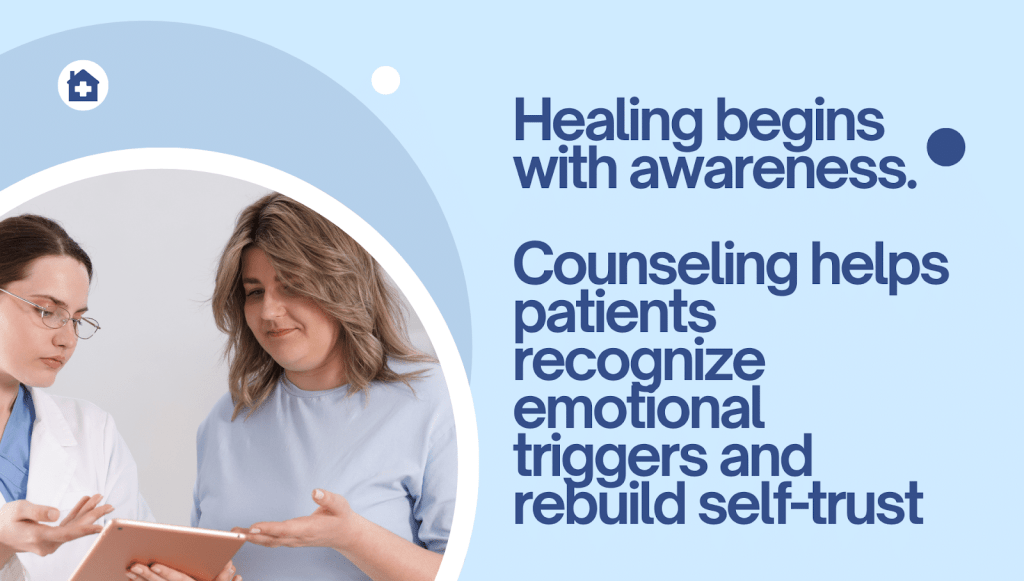
Counseling’s role in post-ESG care is more than emotional support; it is neurological retraining. Modern therapy approaches such as Cognitive Behavioral Therapy (CBT) and Mindfulness-Based Eating Awareness Training (MB-EAT) help patients reshape the way their brains process hunger, reward, and satisfaction.
Here is how it works.
1. Recognizing emotional hunger
Counseling helps patients distinguish between physical and emotional hunger. Many realize that what they used to interpret as hunger was often anxiety, boredom, or loneliness. Through journaling, mindfulness, and guided reflection, patients learn to pause and check in before eating.
2. Reprogramming reward pathways
Years of eating for comfort or reward train the brain to associate food with emotional relief. Therapy helps break this cycle by building new, healthy reward systems such as exercise, creativity, relationships, or relaxation practices that release dopamine without overeating.
3. Reducing shame and food Anxiety
After ESG, some patients become hyper-focused on food choices or calories, creating fear around eating. Mindful counseling teaches self-trust, balance, and body awareness, helping patients reconnect with hunger and fullness cues in a relaxed, self-compassionate way.
4. Strengthening resilience against relapse
Life stressors will happen, and old patterns can resurface. Counseling equips patients with cognitive tools such as reframing thoughts, grounding techniques, and problem-solving skills to stay emotionally steady when motivation dips or triggers appear.
Beyond the Scale: The Emotional Benefits of Counseling
Therapy after ESG is not just about maintaining weight loss; it is about emotional liberation. Many patients report profound psychological changes:
- Improved self-esteem: As patients reconnect with their bodies, they begin seeing themselves as capable, not broken.
- Reduced anxiety and depression: Consistent counseling lowers emotional volatility and builds coping skills.
- Healthier relationships: Family dynamics often shift as patients develop new boundaries and confidence.
- Greater self-compassion: Instead of perfectionism, patients learn to approach progress with patience and care.
When these emotional layers heal, the body naturally follows. A balanced mind sustains a balanced lifestyle.
The Role of Integrated Care: Bariendo’s Holistic Approach
The best outcomes occur when counseling, nutrition, and medicine are aligned. Clinics such as Bariendo, co-founded by Dr. Jirapinyo, have redefined obesity care through what they call a longitudinal model, a continuous and multidisciplinary form of support that treats the patient as a whole person.
This approach combines medical expertise, dietary guidance, and behavioral therapy to ensure that no aspect of the patient’s journey is left unaddressed. It acknowledges that obesity is not a failure of willpower but a chronic condition shaped by biology, psychology, and environment.
By creating an ongoing partnership between clinicians, counselors, and patients, this model transforms short-term weight loss into long-term wellness.
Reclaiming Control Through Mindfulness
One of the most valuable tools patients learn in counseling is mindfulness, the practice of being fully present with their thoughts, emotions, and sensations without judgment.
Mindfulness helps them tune into hunger cues, slow down at meals, and recognize emotional triggers before they spiral into old patterns. It turns eating from a reflex into a conscious act of self-care.
As Harvard Health Publishing explains, mindfulness allows people to “become more aware of hunger and satiety cues, which can reduce overeating and help maintain weight loss.” This approach aligns perfectly with ESG recovery, where learning to listen to the body again is vital for balance and success.
A New Chapter: From Surgery to Self-Discovery
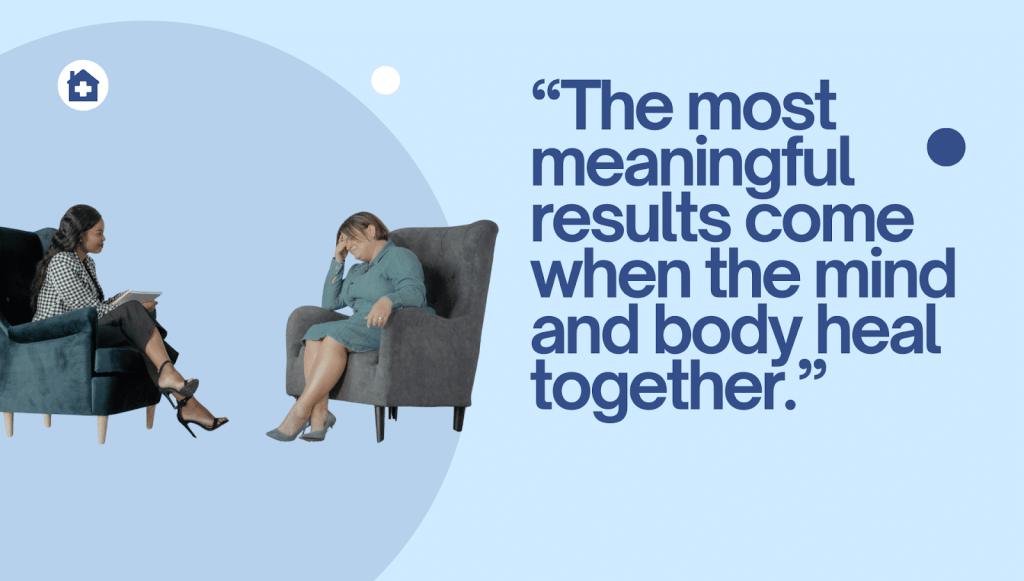
The most powerful transformations after ESG are rarely about body size; they are about identity. Many patients describe it as finally coming home to themselves.
They learn to celebrate small victories, to respond to setbacks with curiosity instead of shame, and to understand that healing is not linear. With counseling as part of their journey, they no longer see weight loss as punishment or penance but as an act of self-respect.
Every mindful choice, every therapy session, and every moment of self-awareness rewires the brain toward lasting health and confidence.
Conclusion: Healing the Body Starts with Healing the Mind
ESG is a medical breakthrough, but counseling is what makes it truly transformative. Together, they form a partnership between science and psychology, between the stomach and the soul.
As more clinics and mental health professionals collaborate, one truth becomes undeniable: the path to sustainable weight loss is not paved with restriction but with understanding.
Lasting wellness begins when patients learn to nourish both their bodies and their minds.
In that space between hunger and healing, counseling becomes not just support, but freedom.


