
Equine therapy has moved from the fringes of alternative treatment to a recognized component of many mental health programs. The question of effectiveness, however, requires more than anecdotal success stories.
Research over the past two decades has begun to substantiate what therapists and clients have long observed: interaction with horses can produce measurable improvements in psychological symptoms and emotional regulation.
This therapeutic approach combines the physical presence of horses with structured activities to address conditions ranging from post-traumatic stress disorder to depression and anxiety.
The methodology draws on several therapeutic principles. Horses respond to subtle emotional cues from humans, providing immediate, non-judgmental feedback that many people find easier to process than verbal critique. This creates opportunities for clients to develop awareness of their emotional states and behavioral patterns in real time.
Understanding the Therapeutic Framework
Equine-assisted therapy encompasses several distinct approaches. Equine-assisted psychotherapy integrates horses into talk therapy sessions with a licensed mental health professional present. Equine-assisted learning focuses on personal development and skill-building through horse-related activities. Both models require specific training and certification beyond standard mental health credentials.
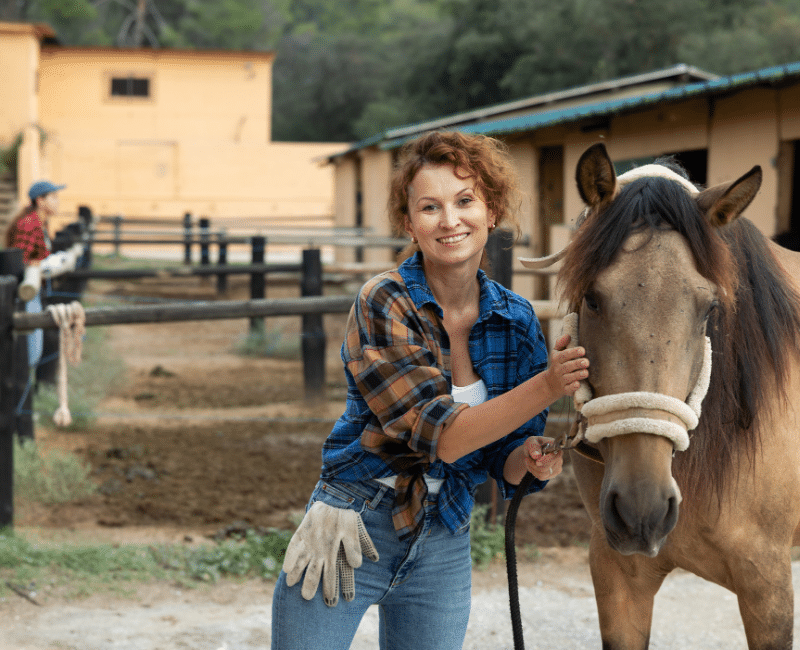
The therapeutic environment differs significantly from traditional office settings. Sessions typically occur in outdoor spaces where clients engage in activities like grooming, leading, or observing horses. The physicality involved can help individuals who struggle with purely verbal processing to access and express emotions that might otherwise remain buried.
How Horses Function as Co-Therapists
Horses possess qualities that make them uniquely suited for therapeutic work. As prey animals, they maintain constant awareness of their environment and the emotional states of those around them. When a person approaches a horse while feeling anxious or angry, the horse often mirrors that tension, providing tangible feedback about internal states the person may not fully recognize.
This mirroring effect creates what therapists call a “living biofeedback system.” Unlike human therapists who might inadvertently mask their reactions, horses offer authentic, immediate responses. A horse that steps away from someone who approaches too aggressively demonstrates a natural consequence that can spark insight into relationship patterns.
Evidence Supporting Therapeutic Outcomes
Research into equine therapy has grown substantially, though the field still needs larger-scale studies. A 2017 systematic review published in the Community Mental Health Journal analyzed multiple studies and found consistent evidence for reduced symptoms of depression and anxiety following equine-assisted interventions. Effect sizes varied depending on the specific population and intervention model, but many studies showed statistically significant improvements.
Studies focused on PTSD have produced particularly promising results. Veterans participating in equine therapy programs have demonstrated decreased symptom severity on standardized measures. One study published in the Journal of Clinical Psychology showed that participants in an equine-assisted learning program experienced significant reductions in PTSD symptoms that persisted at follow-up assessments.
Measuring Psychological Change
Researchers use various assessment tools to evaluate outcomes. Self-report measures track changes in mood, anxiety levels, and trauma symptoms. Physiological markers such as cortisol levels and heart rate variability provide objective data about stress response. Qualitative interviews capture subjective experiences of therapeutic benefit that standardized measures might miss.
The challenge lies in isolating the specific mechanisms of change. Does improvement result from the horse interaction itself, the outdoor setting, the novelty of the activity, or the therapeutic relationship with the provider? Most likely, multiple factors contribute simultaneously, making it difficult to attribute outcomes to any single element.
Who Benefits Most from Horse-Based Interventions
Certain populations appear to respond particularly well to equine therapy. Adolescents, who may resist traditional talk therapy, often engage more readily when activities involve caring for animals. The hands-on nature of the work appeals to kinesthetic learners and those who struggle with sitting still in conventional therapy settings.
Individuals with trauma histories frequently report feeling safer with horses than in traditional therapeutic environments. The non-verbal nature of horse communication can feel less threatening than sustained eye contact or direct questioning that characterizes many therapy sessions.
Addressing Anxiety and Depression
People experiencing anxiety disorders may benefit from the grounding effect of working with horses. The need to stay present and attentive when handling a large animal naturally interrupts rumination patterns. Physical activity combined with focused attention creates a form of moving meditation that many clients find more accessible than seated mindfulness practices.
Depression often responds to the sense of purpose that comes from caring for another being. Horses require consistent care regardless of how a person feels on a given day. This external structure can help combat the motivation deficits and isolation that characterize depressive episodes.
Practical Considerations and Limitations
Equine therapy requires specific resources that limit accessibility. Facilities need appropriate land, horses trained for therapeutic work, liability insurance, and staff with dual expertise in mental health and equine handling. These requirements translate to higher costs compared to office-based therapy, and insurance coverage remains inconsistent.
Geographic location matters significantly. Rural and suburban areas have more equine facilities, while urban residents may face substantial travel barriers. Weather conditions affect session scheduling, and some individuals have allergies or phobias related to horses that make this approach unsuitable.
Safety and Training Standards
Professional standards continue to evolve. Organizations like the Professional Association of Therapeutic Horsemanship International (PATH Intl.) and the Equine Assisted Growth and Learning Association (EAGALA) have established certification programs that require specific training hours and competency demonstrations. These standards help ensure both client safety and therapeutic integrity.
Horses used in therapy settings undergo assessment and training to ensure appropriate temperament. Not every horse suits this work. Programs must monitor animal welfare carefully, as horses can experience stress from therapeutic interactions just as they would from any demanding work.
Integration with Traditional Treatment Approaches
Most practitioners view equine therapy as a complement to conventional treatment rather than a replacement. In Eastman, Georgia, Ingrained Recovery offers equine therapy programs for persons suffering from PTSD and other mental health issues, along with its evidence-based treatment programs.
Someone with major depressive disorder might participate in equine sessions while also taking prescribed medication and engaging in cognitive behavioral therapy. The experiential nature of equine work can reinforce concepts introduced in talk therapy.
Treatment plans should reflect individual needs and preferences. Some people respond better to experiential modalities, while others prefer traditional approaches. The key is matching intervention to client characteristics rather than applying a one-size-fits-all model.
Building Therapeutic Skills Through Equine Work
Skills developed during equine therapy often transfer to other life contexts. Learning to approach a nervous horse with calm assertiveness can improve interpersonal communication. Completing a challenging task with a horse builds self-efficacy that extends beyond the arena. These generalizable skills represent one of the methodology’s most valuable aspects.
Therapists work to make these connections explicit. During processing sessions after activities, clients identify parallels between their interactions with horses and patterns in their relationships or internal experiences. This reflection transforms concrete experiences into lasting psychological change.
The Future of Evidence-Based Equine Interventions
As the field matures, research methodology has become more sophisticated. Randomized controlled trials with adequate sample sizes are emerging, though they remain less common than case studies and small-scale investigations. Researchers are working to identify specific mechanisms of change and develop manualized protocols that can be replicated across settings.
Insurance coverage will likely expand as the evidence base grows stronger. Some providers already recognize equine therapy for specific diagnoses, particularly PTSD. Broader acceptance within the medical establishment requires continued demonstration of cost-effectiveness and sustained outcomes.
Choosing Equine Therapy for Mental Health Treatment
Current evidence suggests that equine therapy represents a valuable addition to the mental health treatment landscape when implemented by qualified professionals. The methodology offers unique benefits for certain populations, particularly those who struggle with traditional talk therapy or have trauma-related conditions.
While more research is needed to establish definitive best practices, existing studies support its effectiveness for reducing symptoms of anxiety, depression, and PTSD. As with any treatment approach, success depends on proper implementation, appropriate client selection, and integration within a comprehensive care plan. For individuals drawn to experiential and nature-based interventions, equine therapy provides a credible, evidence-supported option worth considering alongside more conventional treatments.
Citations
1. Selby, A., & Smith-Osborne, A. (2017). A systematic review of effectiveness of complementary and adjunct therapies and interventions involving equines. Health Psychology, 36(4), 418-432. doi.org/10.1037/hea0000481
2. Earles, J. L., Vernon, L. L., & Yetz, J. P. (2015). Equine-assisted therapy for anxiety and posttraumatic stress symptoms. Journal of Traumatic Stress, 28(2), 149-152. doi.org/10.1002/jts.21990
3. Yorke, J., Nugent, W., Strand, E., Bolen, R., New, J., & Davis, C. (2013). Equine-assisted therapy and its impact on cortisol levels of children and horses: A pilot study and meta-analysis. Early Child Development and Care, 183(7), 874-894. doi.org/10.1080/03004430.2012.693486
4. Burgon, H. L. (2011). ‘Queen of the world’: Experiences of ‘at-risk’ young people participating in equine-assisted learning/therapy. Journal of Social Work Practice, 25(2), 165-183. doi.org/10.1080/02650533.2011.561304
5. Professional Association of Therapeutic Horsemanship International. (2023). Standards for Certification and Accreditation. pathintl.org/resources-education/resources/standards