

Mental health care rarely happens in a single dramatic moment. It happens in the small ones: the conversation at three in the morning when a patient cannot sleep, the change in appetite somebody noticed and wrote down, the follow-up call that catches a problem before it becomes a crisis. Those moments belong to nurses more than to anyone else in the system, which is why the quality of mental health support in any setting tracks closely with the preparation and judgment of the nursing staff working in it.
Where Advanced Study Changes What a Nurse Can Do
Practicing nurses who want to move into research, teaching, or program design run into a ceiling quickly, and doctoral study is what breaks through it. Without training in study design, statistics, and grant writing, clinical questions stay anecdotal and never make it into the literature where they can change practice at scale. The best way to move past that limit is to enroll in one of the PhD nursing programs built around research rather than practice.
Graduates of research-focused doctoral study go into academia, program leadership, and settings where the questions being asked shape care for far more people than any one clinician ever treats directly.
Presence as a Clinical Skill
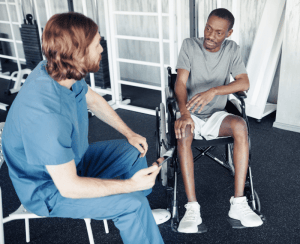
The most underrated thing a nurse does in mental health care is stay in the room. Physicians rotate through, specialists consult and leave, and family members visit on a schedule. Nursing staff is the constant, and that continuity is what allows patterns to surface.
Patients disclose things to the person who has been there all week that they will not disclose in a fifteen-minute appointment. A patient who has stopped washing, stopped eating with others, or started sleeping through the afternoon is telling you something before they say a word about it. Recognizing that requires knowing what their baseline looked like, and only someone with sustained contact has that reference point.
Therapeutic communication is a skill that gets taught and then gets refined over years. It involves listening without steering, tolerating silence, and asking open questions rather than the closed ones that produce the answer the clinician expects. Done well, it is invisible. Done poorly, patients disengage and stop reporting anything at all.
Catching Problems in General Settings
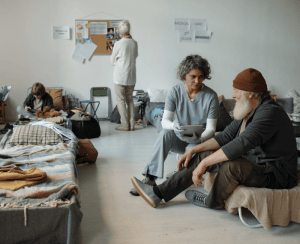
Most mental health issues do not present in a psychiatric unit. They present on a medical floor, in a clinic waiting room, in a school office, or in a home during a routine visit for something unrelated. The nurse in that setting is frequently the only person positioned to notice.
Depression in an older patient gets attributed to aging. Anxiety in a young person gets read as behavior. Substance use gets missed because nobody asked in a way that made an honest answer possible. Screening tools help, but the willingness to ask directly and without judgment matters more than the instrument.
Physical and psychological symptoms overlap constantly. Chest tightness, fatigue, digestive complaints, and chronic pain all have psychological components that get overlooked when the workup stays purely physical. Nurses trained to hold both possibilities at once catch what a narrower approach misses.
Managing Risk Without Losing Trust
Assessing whether someone is in danger is among the hardest parts of the work, and it is done more often by nurses than by anyone else. It requires asking direct questions that feel uncomfortable to ask, and it requires doing so in a way that does not make the patient regret answering.
The evidence is consistent that asking about self-harm does not introduce the idea. What it does is signal that the subject is speakable, which is frequently the first time anyone has offered that to the person. The response matters as much as the question. Calm, matter-of-fact follow-up keeps the conversation open. Alarm closes it.
Documentation and handoff carry enormous weight here. A concern noticed on one shift and not communicated clearly to the next is a concern that effectively did not happen. Structured handoff protocols exist for exactly this reason.
Working Against Stigma From the Inside
Health care settings are not immune to the attitudes that keep people from seeking help. Patients with psychiatric histories get labeled as difficult, their physical complaints get discounted, and their treatment gets delayed. Nurses see this happen and are often the ones positioned to interrupt it.
Language does real work. Describing someone as a person with schizophrenia rather than as a schizophrenic sounds like a small distinction and is not. Charting that records behavior rather than characterizes personality gives the next clinician something useful instead of a prejudice to inherit.
Advocacy also means pushing back when a treatment plan ignores the psychological dimension of a case, or when a patient is being discharged without the follow-up that would make the discharge safe.
Sustaining the People Doing the Work
None of this is possible from a workforce that is depleted. Mental health nursing carries emotional weight that accumulates, and burnout in this specialty runs high for reasons that are structural rather than personal.
Supervision, debriefing after difficult events, manageable caseloads, and genuine time off are not perks. They are what keeps clinical judgment sharp. A nurse working double shifts on an understaffed unit will miss things that the same nurse would catch when rested.
Organizations that treat staff wellbeing as an operational requirement rather than a wellness initiative retain experienced clinicians, and experience is precisely what mental health work runs on. The nurse who has seen a hundred presentations of the same condition recognizes the hundred and first faster than any protocol will produce. Building and keeping that depth of experience is the most direct investment any system can make in the quality of care it provides.